How to Care for 18k Gold and Natural Stone Jewellery
What to do, what to avoid, and why stones need different treatment from gold.
Fine jewellery is not fragile, but it is not indifferent either. A piece worn daily in the Gulf meets heat, sand, chlorine, sea water, perfume and oud oils, and each of those leaves a mark over time. None of it is dramatic. Almost all of it is avoidable.
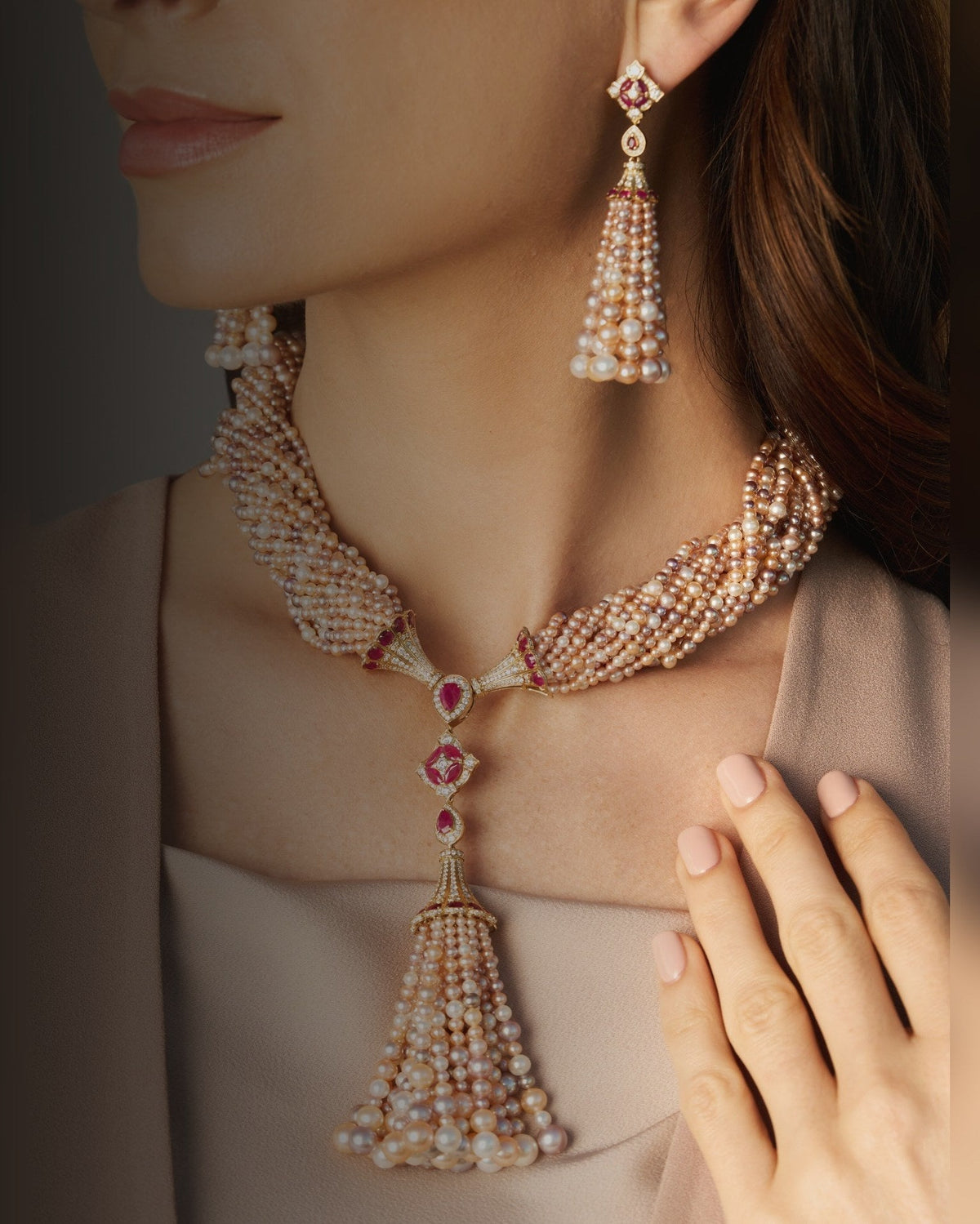
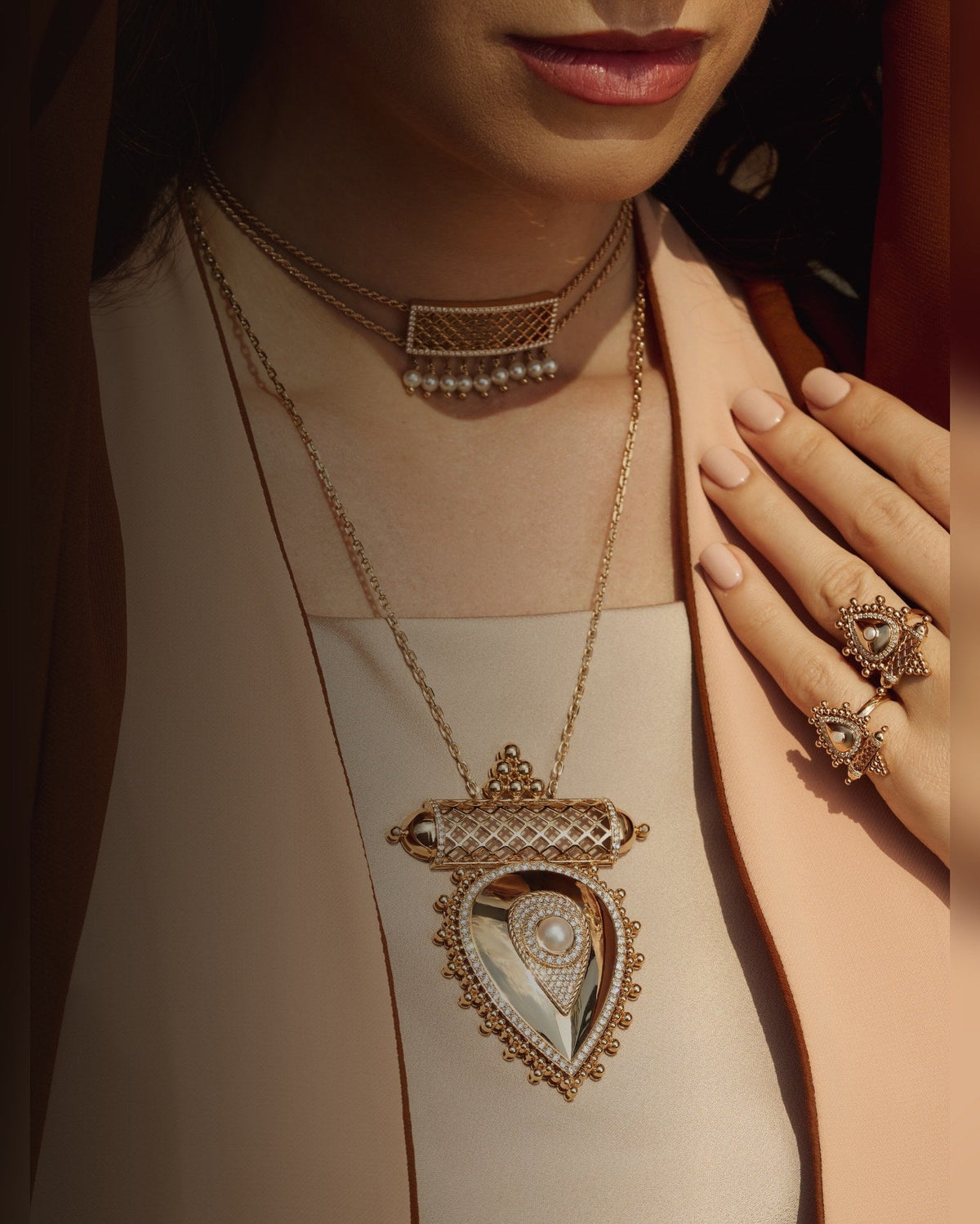
Every Misk piece is handcrafted in the United Arab Emirates in 18k gold, and many are set with natural stones: mother-of-pearl, agate, malachite, turquoise, rose quartz and amethyst. Gold and stone do not want the same care, and that is the single thing most people get wrong.
The one rule to remember: jewellery goes on last and comes off first. On after perfume, cream and hairspray. Off before swimming, sleeping, showering or exercising.
Caring for 18k gold
Everyday
Wipe your piece with a soft, dry cloth after wearing it. That single habit removes the skin oils and traces of perfume that dull gold over weeks, and it takes a few seconds.
When it needs more than a wipe
For a piece in plain gold with diamonds only, lukewarm water with a drop of mild soap, a very soft brush, then a thorough rinse and a dry cloth. Let it dry completely before putting it away.
Avoid bleach, ammonia, alcohol and anything described as a household cleaner. They attack the alloys in gold and loosen the settings that hold stones in place.
Does gold scratch?
Yes. 18k gold is soft enough to take fine surface marks with daily wear, and that is normal. It is the reason pieces should not be kept loose together in one box, and the reason a gold bangle worn next to a watch will show its history sooner.
Natural stones are a different matter
This is where most damage happens, and it is almost always avoidable.
Mother-of-pearl, agate, malachite, turquoise, rose quartz and amethyst are softer and more porous than diamond. They absorb what they touch. Perfume, cream, chlorine and sea water all penetrate the surface, and the dulling that follows cannot be polished out the way a mark on gold can.
Never do these
- Never use an ultrasonic cleaner. It is excellent for gold and diamonds, and it will crack or cloud porous stones. Malachite and turquoise are the most vulnerable.
- Never use a steam cleaner on a piece with natural stones.
- Never soak a stone-set piece in soapy water. Water works its way behind the setting and stays there.
- Never spray perfume onto a piece you are already wearing.
What to do instead
A soft dry cloth, nothing else. If a stone needs more than that, bring the piece to us rather than treating it at home.
A word on mother-of-pearl and pearl
Both are organic. They come from a living shell, they contain a little water, and they are the most delicate things we set. Keep them away from heat and from very dry air, which is a real consideration in an air-conditioned home in summer. Wipe them after wearing and store them where they are not pressed against harder stones.
Living with jewellery in the Gulf
The sea and the pool
Take your jewellery off. Chlorine is the most aggressive thing a gold piece meets in ordinary life, and salt water combined with sand acts like a fine abrasive. If you forget and swim with a piece on, rinse it in fresh water and dry it as soon as you are out.
Heat and sun
Prolonged direct sun fades some stones, amethyst and rose quartz among them. A piece left on a dashboard or beside a window for days is not in a good place.
Perfume and oud
Oil-based perfumes and oud leave a film that builds up around settings and in openwork. Let perfume dry on the skin before you put your jewellery on, and wipe the piece afterwards.
How to store your pieces
- Each piece in its own pouch or compartment, so nothing rubs against anything else.
- Chains fastened and laid flat rather than dropped in a heap, which is how knots form.
- Away from the bathroom. Humidity and daily temperature swings are harder on stones than most people expect.
- In the box it came in, when you travel. A soft pouch in a handbag is not protection against a hard knock.
When to bring a piece back to us
Have a piece looked at if a stone moves or sounds loose when you tap it gently, if a clasp no longer closes firmly, if a chain has a link that has opened, or if a stone has lost its depth and a dry cloth no longer brings it back.
Write to us at info@miskjewellery.com, or come to the boutique at Mirdif 35 Mall, Al Khawaneej, Dubai.
Common questions
Can I shower with my gold jewellery on?
Better not. Soap and shampoo leave a film that dulls gold, and water sits behind stone settings. Take it off, and you will keep its shine far longer.
Can I wear 18k gold in the sea?
Gold itself will not be harmed by salt water, but sand acts as an abrasive and salt dries into settings and clasps. If a piece has natural stones, keep it out of the sea entirely.
Does chlorine damage gold?
Yes. Chlorine attacks the alloy metals mixed with gold, and over repeated exposure it weakens the metal around the settings that hold stones. It is the main reason to take jewellery off before a pool.
Can I clean malachite or turquoise at home?
Only with a soft dry cloth. Both are porous and both can be permanently clouded by water, soap or an ultrasonic cleaner. If more is needed, bring the piece to us.
Why has my white gold changed colour?
White gold is yellow gold alloyed with white metals, and it is usually finished with rhodium plating that gives it its bright white tone. That plating wears with time, which is normal, and it can be restored.
How often should fine jewellery be checked?
Once a year is a sensible habit for pieces you wear daily, particularly rings and bracelets, which take the most knocks. A setting that is beginning to loosen is a small repair when it is caught early and a lost stone when it is not.